
What Chair Exercises Are Safe for Older Adults With Weak Knees?
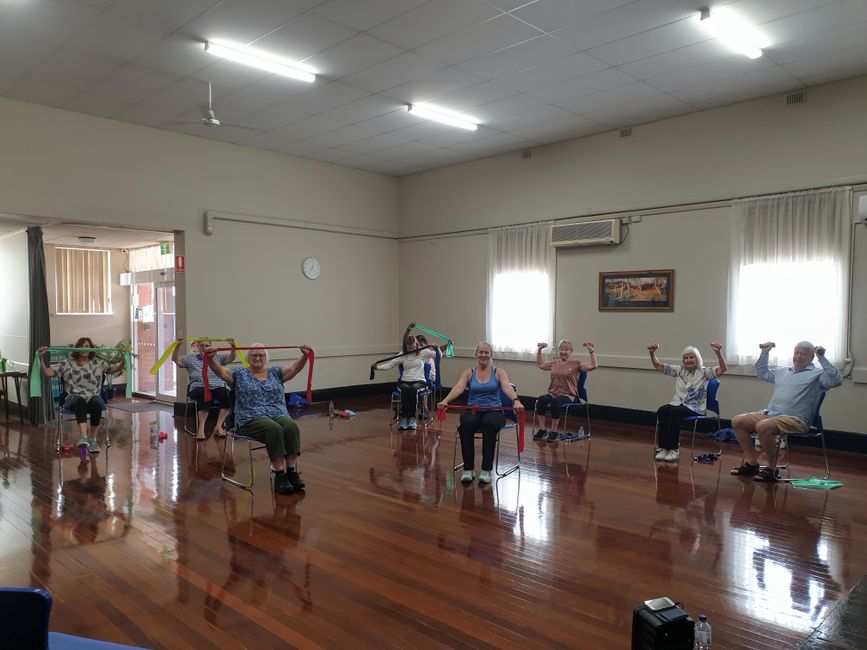
A safe home routine begins with a sturdy chair, slow seated strength work, and supported standing balance practice when seated movements feel steady. Build from short sessions rather than forcing a fixed pace. National Institute on Aging guidance says strength, balance, flexibility, and endurance work belong together, while people with balance trouble need support nearby and a clinician’s guidance on fall risk.
What chair exercises can I do if I have weak knees?
Start with movements that let the chair carry part of the load: seated marching, knee extensions, heel raises, arm curls with light resistance, and standing up from the chair only when that motion feels controlled.
The chair is not a concession. It is the base. It gives the body a fixed place to begin, then makes room for strength to grow without asking anyone to get down to the floor.
The National Institute on Aging says strength training can begin with light weights or a light resistance band. Its guidance, accessed in 2026, says to add resistance only after two sets of 10 to 15 repetitions feel easy. That rule keeps progression tied to control rather than impatience.
| Part of the 15-minute routine | Movement | What to watch |
|---|---|---|
| First 5 minutes | Seated marching and gentle ankle lifts | Stay tall in the chair; keep both feet within easy reach of the floor. |
| Next 5 minutes | Seated knee extensions and light arm curls | Move slowly; use a light weight or light band only when it is controlled. |
| Final 5 minutes | Supported sit-to-stands or supported heel-to-toe steps | Keep the chair close and hold support when balance feels uncertain. |
This 15-minute format is a practical 2026 editorial structure, not a clinical threshold. The movements draw from NIA balance examples, including standing from a seated position and heel-to-toe walking. Skip the standing block when it does not feel secure; seated work still counts as work.
A systematic review by Klempel et al. in 2021 reviewed 25 chair-based exercise studies involving 1,388 participants. Across 19 studies in its meta-analysis, chair-based exercise improved lower-extremity function by a mean 2.25 repetitions on the 30-second chair-stand test. The point is plain: a chair routine can train strength, not merely fill time.
Can chair exercises improve balance and prevent falls?
Chair exercises can support balance when they pair leg, back, and abdominal strength with balance practice, though they do not remove every cause of falling.
Balance is not one thing. It is strength, footing, vision, hearing, medicines, and the conditions a person brings into the room. The National Institute on Aging says persistent balance problems need medical assessment because those factors can play a part.
In 2026 guidance, the NIA tells people who feel unsteady to keep a sturdy chair or person nearby during balance activity. It also recommends nonskid, rubber-soled, low-heeled footwear rather than socks, smooth-soled slippers, or high heels when dizziness raises fall concerns.
The Centers for Disease Control and Prevention states in its current 2026 guidance that balance activities help prevent falls and that strengthening the back, abdomen, and leg muscles improves balance. A useful progression is seated marching first, then controlled sit-to-stands, then supported standing balance. Support is not failure. Support is the bridge.
For older adults planning travel, steadier standing and walking can also make the practical parts of a trip less demanding. The same habit of checking conditions before leaving home appears in this guide to finding low-supplement cruise fares for solo travelers over 60: preparation changes the day before the day begins.
How often should seniors do seated exercises at home?
Older adults can use seated exercise on at least 3 days each week and add strength work on at least 2 nonconsecutive days, building slowly toward a fuller routine.
The National Institute on Aging’s guidance, accessed in 2026, says being active at least 3 days per week is best and that any activity is better than none. It also sets a long-term target of at least 150 minutes of weekly moderate-intensity aerobic activity and strength work for major muscle groups at least 2 days each week. Those are destination markers, not a demand for the first session.
| Weekly focus | Evidence-based marker | How a chair routine fits |
|---|---|---|
| Strength | At least 2 days weekly, according to NIA guidance accessed in 2026 | Use seated knee extensions, arm work, and controlled sit-to-stands on nonconsecutive days. |
| Balance | Weekly balance activity, according to CDC guidance accessed in 2026 | Add supported standing work only when the chair remains close and the movement is steady. |
| Aerobic activity | 150 minutes of moderate activity weekly, according to CDC guidance accessed in 2026 | Use chair work as one part of an active week; seated strength work does not replace every kind of movement. |
The CDC’s current 2026 guidance also calls for 8 to 12 repetitions of each muscle-strengthening activity for at least one set; two or three sets bring added benefit. NIA guidance accessed in 2026 uses a different progression marker: increase resistance when two sets of 10 to 15 repetitions are easy. These are not competing rules. One sets a workable starting range. The other tells you when the load has become too light.
Warm up before activity, cool down afterward, wear suitable shoes, and drink water before, during, and after exercise, as the NIA advises in guidance accessed in 2026. A short routine repeated with care beats a long routine abandoned after one hard day.
Frequently Asked Questions
What type of chair is safe to use for chair workouts?
Use a sturdy chair that does not slide or roll. The National Institute on Aging advises people who feel unsteady to keep a sturdy chair or another person nearby for support during balance work. Nonskid, rubber-soled, low-heeled footwear offers more secure footing than socks or smooth-soled slippers, according to the National Institute on Aging.
Can I build leg strength without getting on the floor?
Yes. Chair-based exercise studies reviewed by Klempel and colleagues found improved lower-extremity function on the 30-second chair-stand test. Seated knee extensions, sit-to-stands, and supported standing movements keep the work close to a chair rather than on the floor.
When should I stop exercising and call a doctor?
Persistent balance difficulty or dizziness calls for medical assessment, according to the National Institute on Aging. Balance problems can relate to medications, vision, hearing, or medical conditions. Older adults with specific health conditions also need to discuss an exercise plan with a health care provider, the National Institute on Aging states.
Sources
- National Institute on Aging: Four Types of Exercise Can Improve Your Health and Physical Ability
- Centers for Disease Control and Prevention: What Counts for Older Adults
- National Institute on Aging: How Older Adults Can Get Started With Exercise
- Klempel et al.: Effects of Chair-Based Exercise on Strength and Physical Function
- National Institute on Aging: Older Adults and Balance Problems
Disclaimer: This article is for general information only and is not medical advice. It is not a substitute for diagnosis or treatment by a qualified healthcare professional. Always speak to your doctor before acting on anything you read here.

Can Ab Exercises Remove Belly Fat?
Why ab workouts do not target belly fat, and how walking and strength work fit into a sustainable overall fat-loss plan.
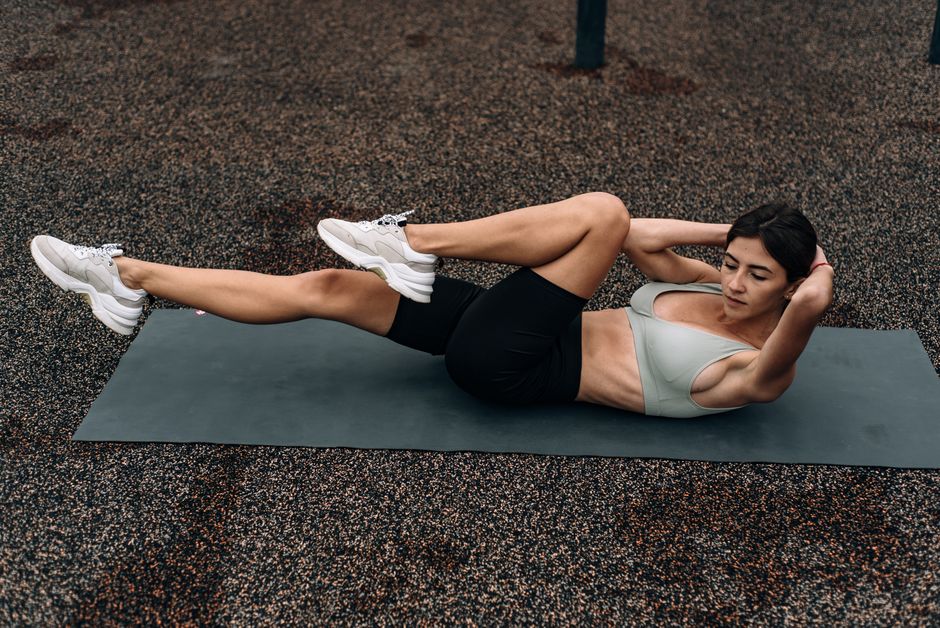
How Many Exercises Do I Need for an Effective Beginner Workout?
A practical guide to choosing a small, effective set of beginner exercises for home, gym, and short training sessions.
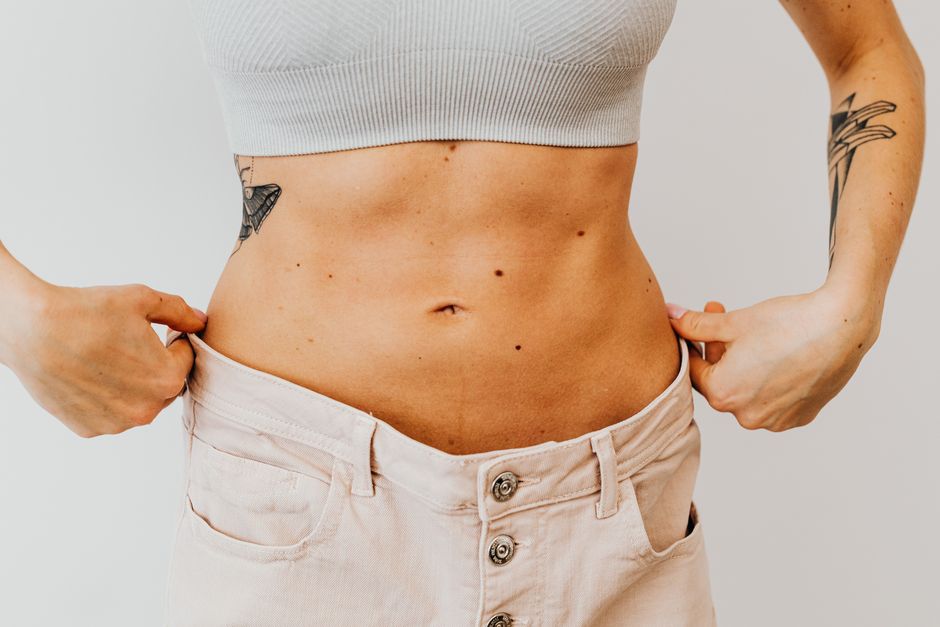
What Is the Best Exercise to Lose Belly Fat?
An evidence-based beginner guide to belly-fat loss, combining cardio, strength work, core training, daily movement, and realistic progress measures.

How Can I Choose and Return a Tillys Swimsuit When Sizes Vary?
Use measurements, brand charts, and Tillys return rules to choose a swimsuit with a clear fallback when sizes vary.