
How Many Exercises Do I Need for an Effective Beginner Workout?
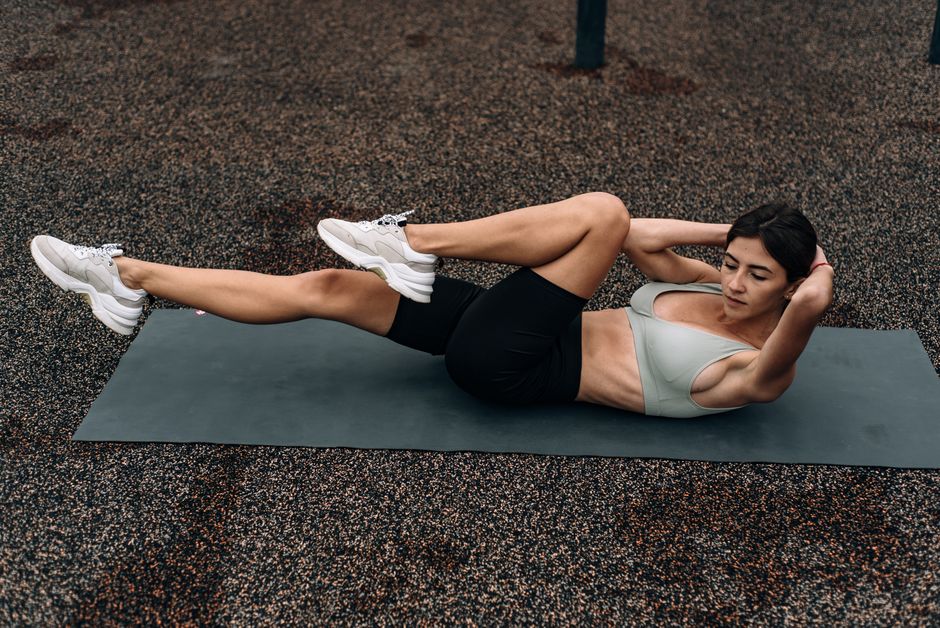
A busy beginner does not need a long workout. A small plan that covers the major muscle groups across the week, built around compound movements and repeated at least twice weekly, can be effective. The 2023 American Heart Association statement describes 8 to 10 exercises, 1 to 3 sets of 8 to 12 repetitions, and says effective resistance training can take 30 to 60 minutes per week.
How many exercises should I do in a workout?
There is no need to perform every exercise in every workout. The 2023 American Heart Association statement says 8 to 10 exercises can cover the major muscle groups across a program, not as a rule for every visit to the gym or every home session.
Start with coverage, not a crowded checklist. The 2018 U.S. Department of Health and Human Services guidelines name the legs, hips, back, abdomen, chest, shoulders, and arms as the major muscle groups. A short session can train part of that map. The next session can train the rest.
Compound movements reduce the number of choices because, as the 2023 American Heart Association statement puts it, some compound exercises target more than one major muscle group. One movement can earn its place twice.
| Available setup | Minimal session structure | What determines the exercise choice |
|---|---|---|
| Home | Two to four bodyweight or band movements | The muscle groups not trained elsewhere that week |
| Gym | Two to four machine or free-weight movements | Comfort with the equipment and ability to use a complete range of motion |
| Thirty minutes | Begin with larger, multiple-joint movements; add a smaller movement only if time remains | The 2009 ACSM sequence: large muscle groups before small ones |
The table is a framework, not a prescription. A plan grows when a gap remains across the week, not because a workout looks too short on paper.
For beginners, the 2009 American College of Sports Medicine position stand describes an 8 to 12 repetition-maximum range and 2 to 3 training days per week. The same 2009 statement recommends placing large muscle groups and multiple-joint exercises before smaller, single-joint work. Order protects the work that matters most.
Is one exercise per muscle group enough?
One exercise per muscle group can be enough for a beginner routine when the full week covers all major muscle groups and the exercise is performed with enough effort and consistency. The 2023 American Heart Association statement reports that a single set of 8 to 12 repetitions to voluntary fatigue, using 40% to 60% of one-repetition maximum for 8 to 10 exercises twice weekly, can be highly effective.
Enough and maximum are different words. The 2009 ACSM position stand says higher-volume, multiple-set programs are used to maximize hypertrophy. The 2016 Journal of Sports Sciences meta-analysis also found a graded relationship between weekly resistance-training volume and muscle growth.
That distinction gives a clean rule for a busy schedule. Begin with the smallest routine that covers the week. Add an exercise or set only when it fills an uncovered muscle group, supports a stated goal, or follows stable form and recovery. More work is not automatically better work.
Progress can be plain. The 2009 ACSM position stand says that when a trainee completes 1 to 2 repetitions beyond the target on 2 consecutive workouts, load can increase by 2% to 10%. A repeated exercise makes that signal visible. Constant swaps hide it.
Equipment comfort also shapes repeatability. Footwear, balance, and secure contact with the floor can affect whether a movement feels stable; readers weighing shoe fit can use this guide to wider, deeper, or more secure comfort shoes alongside their equipment decisions.
Should beginners use machines, free weights, or bodyweight exercises?
Beginners can use machines, free weights, elastic bands, or bodyweight exercises because each is a viable resistance-training mode. The 2023 American Heart Association statement says bodyweight training can be as effective as machine or free-weight training.
The best starting mode is the one available, understandable, and repeatable with a complete range of motion. The 2018 U.S. guidelines list weights, elastic bands, and bodyweight resistance as ways to perform muscle-strengthening activity. Equipment is the container. The training work is the point.
The 2026 ACSM position stand synthesized 137 systematic reviews involving more than 30,000 participants. It found that equipment type and exercise complexity did not consistently affect training outcomes. That finding removes a common false choice: a beginner does not need a perfect tool before beginning a simple program.
The 2018 U.S. guidelines advise inactive people to start at lower intensity and gradually increase frequency and duration. The same guidelines state that adults need muscle-strengthening activity of moderate or greater intensity involving all major muscle groups on 2 or more days each week. Small sessions still belong to the week.
A minimal routine has one job: make the next session possible. The longer plan can wait until the short plan is steady.
Frequently Asked Questions
Can I build muscle with only a few compound exercises?
Yes, a few compound exercises can form the base of a muscle-building routine because they work more than one major muscle group. The 2009 ACSM position stand recommends emphasizing multiple-joint, especially total-body, exercises. The 2016 Journal of Sports Sciences review found that greater weekly volume produced greater hypertrophy, so a minimal routine is a starting point rather than a program designed to maximize muscle growth.
How do I choose exercises if I only have 30 minutes?
Choose a small set of movements that covers the muscle groups not otherwise trained that week, then place the larger, multiple-joint movements first. The 2023 American Heart Association statement says 30 to 60 minutes per week of resistance training can be efficacious, and the 2018 U.S. guidelines state that short activity episodes still count. The useful choice is the one that fits the available equipment and can be repeated with sound form.
Should I change exercises every workout?
No. Repeating a small exercise menu makes it easier to track repetitions, load, and form. The 2026 ACSM overview found that exercise complexity and periodization did not consistently affect outcomes, while the 2009 ACSM position stand gives a clear progression rule: when 1 to 2 extra repetitions are completed on 2 consecutive workouts, load can increase by 2% to 10%.
Sources
- American Heart Association, 2023 Scientific Statement
- U.S. Department of Health and Human Services, Physical Activity Guidelines for Americans
- American College of Sports Medicine, 2009 Resistance Training Position Stand
- American College of Sports Medicine, 2026 Resistance Training Position Stand
- Journal of Sports Sciences, 2016 Resistance Training Volume Review
Disclaimer: This article is for general information only and is not medical advice. It is not a substitute for diagnosis or treatment by a qualified healthcare professional. Always speak to your doctor before acting on anything you read here.