
Will Cheeky Bikini Bottoms Give Me Enough Coverage for Beach Activities?
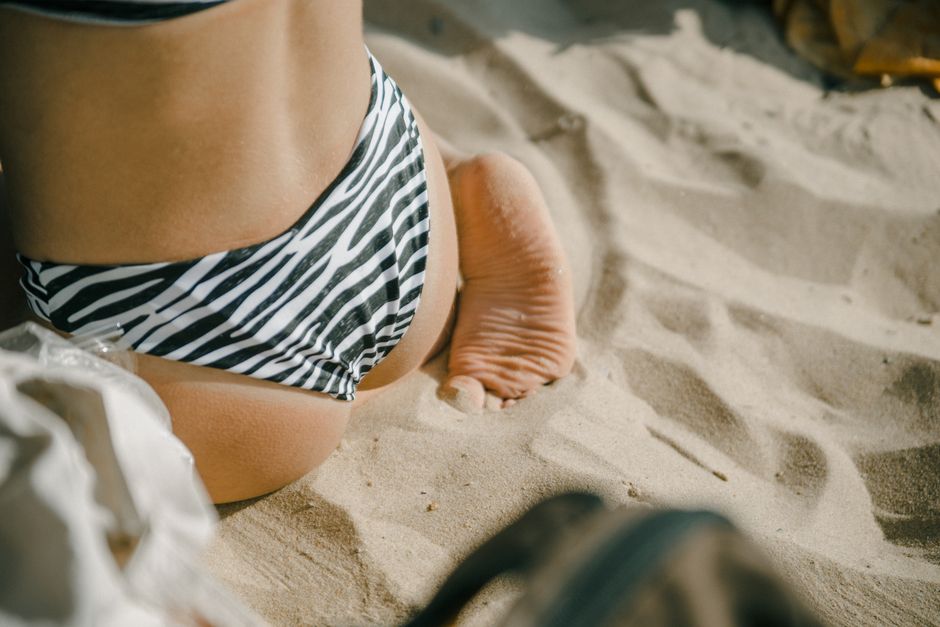
Cheeky bikini bottoms can work for relaxed swimming, sunbathing, and low-impact beach time if they stay put through walking, squatting, and wet-fabric checks. They are a riskier choice for surfing, beach volleyball, tubing, or other forceful water activities; choose more back coverage, secure standard-width sides, and a well-fitting waistband when movement is the priority.
How much coverage should cheeky bikini bottoms have?
Cheeky bikini bottoms should cover enough to remain centered and comfortable during the activity you actually plan to do, not merely while you stand in front of a mirror. “Cheeky” is a coverage category, not a promise of a fixed amount of fabric. The label tells you where the design sits on a spectrum. Your movement check tells you whether it works.
JOLYN’s coverage guide places cheeky styles at its levels 1 and 2, with level 2 described as minimal-to-moderate coverage, a regular-to-high leg cut, and a steep back cut. Its fuller medium-full coverage category is recommended for surf bikinis, beach volleyball bikinis, and practice swimsuits. That is the useful dividing line: low-impact leisure can tolerate a more revealing cut; repeated movement needs a larger margin of coverage.
| Planned activity | Coverage and construction priority | Decision |
|---|---|---|
| Lounging or tanning | Coverage preference leads; confirm the waistband and leg openings stay in place. | Cheeky can be suitable. |
| Casual pool swimming | Check for shifting during walking, squatting, and once wet. | Cheeky can work if it passes every check. |
| Surfing, beach volleyball, or practice swimming | More back coverage and a stable leg opening reduce the need for readjustment. | Choose medium-full or fuller coverage. |
| Tubing or wakeboarding | High force makes adjustable ties a weak point. | Avoid tie sides; use a more secure cut. |
Run the Four-Position Check before committing. Stand normally. Walk several steps. Squat to the depth you would use to pick up a bag or sit at the pool edge. Then assess the suit wet, because a dry fit is incomplete. A PubMed-indexed textile study concluded that fabric should be tested wet and dry because saturation affects fabrics differently. For shoppers, the actionable point is simple: check opacity and coverage after the fabric is wet rather than trusting its dry appearance.
Why do my cheeky bikini bottoms ride up when I walk?
Cheeky bottoms ride up when the cut, edge construction, fabric stretch, or size does not stay matched to your movement. This is a construction problem first, then a sizing problem. Pulling the fabric down every few minutes is not a normal break-in period; it is useful feedback.
Start with the leg opening and rise. A high leg cut paired with a steep back cut naturally exposes more of the body, and a low rise has less waistband area to stabilize the bottom. Wider, more stable sides can help distribute tension. ViX Paula Hermanny’s guide identifies standard-width side bands as a feature intended to create a smooth, secure fit for active days, while warning that tie-side bottoms can loosen during forceful water activities.
Next, inspect the edge. World Aquatics allows edge-seam grippers, including silicone strips and elastic cords, specifically to help swimsuit fabric hold against the skin. These rules govern competition swimwear, not ordinary shopping, but the design logic transfers: a secure edge and waistband do work that a flattering cut alone cannot do. Look for a smooth edge that lies flat. If it rolls, digs in, or migrates during the walk test, move to a different construction.
Fabric also changes under load. Purdue engineering research identifies porosity, percentage stretch, fabric orientation, and the number of layers as factors affecting swimsuit permeability. It reports that greater stretch makes pores larger, and that shell-and-liner combinations behave differently from either layer alone. That is why the standing mirror is an incomplete test: walking and squatting ask the fabric, lining, seams, and elastic to work together.
Use this replacement rule: do not say, “I will keep adjusting it.” Say, “This cut does not clear my movement test.” That saves the time and distraction of managing a swimsuit during the activity.
Should I size up or down in cheeky bikini bottoms?
Size up or down only when the current bottom is consistently too tight or consistently too loose; change the cut when the coverage shape is the problem. Sizing down to create security can make the leg openings bite and encourage upward migration. Sizing up to gain coverage can leave the waistband and sides too loose. Neither solves a steep back cut that simply reveals more than you want.
Use this quick diagnosis. If the waistband gaps, the sides slide, or the fabric drifts when wet, try a smaller size only if the rest of the bottom is not already tight. If the waistband presses in, the leg openings leave deep pressure marks, or the fabric pulls sharply when you squat, try a larger size. If the waistband fits but the back still rides high or feels too revealing, keep the size and choose a different rise, lower leg opening, wider side, or fuller back cut.
Do not let worn elastic distort the decision. A 2024 Polymers study found that the breaking force of tested swimwear materials fell 12.4% after 200 hours in chlorinated water and 65.7% after 300 hours; the chlorine-and-sun condition also fell 65.1% after 300 hours. Those conditions are laboratory exposure periods, not a consumer replacement calendar. Still, the practical conclusion is firm: when an older bottom has lost stretch recovery or no longer stays secure, replace it rather than forcing a new size to compensate for tired material.
For a packed travel or pool day, run the Four-Position Check before leaving: stand, walk, squat, then wet-test. If you must readjust at any step, switch to the next cut up in coverage. The right bikini bottom reduces cognitive load. It lets you focus on the plan, not the fabric.
Frequently Asked Questions
What is the difference between cheeky and Brazilian bikini bottoms?
Cheeky and Brazilian are both lower-coverage options, but labels are not standardized across every brand. The practical distinction is the amount and shape of back coverage on your body: assess the garment in motion rather than relying on the product name. If you need more reliable coverage for activity, choose the option that stays centered through the movement check.
Can I wear cheeky bikini bottoms for swimming and beach activities?
Yes, for relaxed swimming and low-impact beach time, provided the bottom remains secure when wet and during normal movement. For active, on-the-move use, ViX Paula Hermanny advises that cheeky bottoms may not be the best choice and points shoppers toward Brazilian or fuller-coverage options. Forceful activities also make tie sides a weaker choice because they can loosen.
Which bikini-bottom features help prevent slipping and rolling?
Look for a secure waistband, standard-width side bands, a stable edge finish, and a lining that works smoothly with the shell fabric. World Aquatics permits edge-seam grippers such as silicone strips and elastic cords specifically to help fabric hold against the skin, showing why edge construction matters. The fit still needs to pass a walk, squat, and wet-fabric check.
Sources
- World Aquatics Competition Regulations
- Purdue University, The Permeability and Performance of Competition Swimsuits
- Polymers, The Impact of Chlorinated Water and Sun Exposure on the Durability and Performance of Swimwear Materials
- PubMed, Influence of Wetness on the Ultraviolet Protection Factor of Textiles
- JOLYN Swimsuit Coverage Guide
- ViX Paula Hermanny, Cheeky vs. Brazilian Bikini Bottoms