
How Do I Spot a Legitimate Courier Job on Indeed?
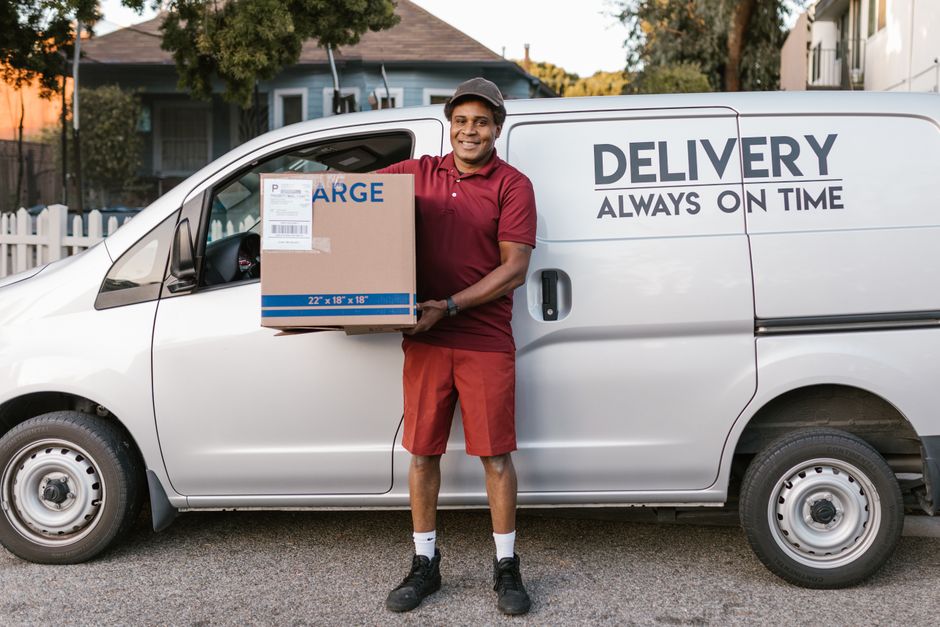
Courier jobs on Indeed can be employee roles or 1099 contractor gigs; the title and payment label do not settle it. Read the listing for control, expenses, tools, benefits, and route rules, then verify the employer before applying. Leave any offer that asks you to receive, repackage, or mail packages from home, or asks for money before work begins.
Are courier jobs on Indeed usually employee jobs or 1099 contractor jobs?
They can be either, and a listing's label is only the first clue.
The Bureau of Labor Statistics defines couriers and messengers as workers who pick up and deliver messages, documents, packages, and other items to business concerns or between offices, using transport such as automobiles, bicycles, motorcycles, or public conveyance. Its May 2023 estimates cover wage-and-salary employment: 72,010 workers nationally, with a median hourly wage of $17.65. That is a useful employee-pay benchmark, not a promise that every listing uses hourly wages.
Look for the pay language. “Hourly wage,” “overtime,” “employee benefits,” and “vacation pay” point toward an employee arrangement. “1099,” “independent contractor,” “owner-operator,” “per route,” and “per delivery” signal that the company presents the work as contract work.
That signal is not a verdict. The Internal Revenue Service says classification rests on the real business relationship. It reviews behavioral control, financial control, and the relationship between worker and business. Who sets the route rules, who supplies tools, whether expenses are reimbursed, whether benefits exist, and whether the work continues all matter.
| Listing language | What to check next |
|---|---|
| Hourly pay or salary | Ask about overtime, benefits, route supervision, and reimbursed expenses. |
| Per route or per delivery | Ask who pays for fuel, maintenance, tolls, insurance, and unpaid waiting time. |
| 1099 contractor | Ask how much control you retain over routes, schedule, tools, and other clients. |
| Owner-operator | Ask what vehicle, operating costs, and insurance the business expects you to carry. |
The Department of Labor makes the same point from another angle. A 1099 form, contractor agreement, method of pay, or work location does not alone decide status under the Fair Labor Standards Act. Employees receive minimum-wage and overtime protections under that law; independent contractors do not. If the facts remain unclear, the IRS says a worker or business can request a determination with Form SS-8.
Names are cheap. Working terms are not.
How can I tell whether a courier listing is legitimate before applying?
A legitimate listing gives you a real employer, a real role, and a clear path from application to work.
Start with identity. Compare the recruiter’s email address with the employer’s website domain. Indeed warns job seekers to watch for misspelled or spoofed domains. Confirm that the offer matches the job you applied for and expect an in-person or video interview instead of an instant offer with little or no interview process.
Then read the work itself. A local courier assignment should describe pickup and delivery work, a service area or route process, vehicle expectations, and pay terms. Vague claims of unusually high pay with no details do not become credible because they use the word “courier.” The BLS employee estimates provide context: its reported 2023 national mean hourly wage was $18.44, while its wage range ran from $13.48 at the 10th percentile to $23.71 at the 90th percentile.
Check the money path before you apply. Indeed says not to send payment to an employer, perform financial transactions for one, or accept money before work is performed. The FTC also states that legitimate employers do not require applicants to pay for a job or deposit a check and send part of the money elsewhere.
- Verify the company website and recruiter email domain.
- Match the offer to the listing you applied for.
- Get the pay unit in writing: hourly, route, delivery, or another stated method.
- Ask who provides the vehicle, tools, fuel reimbursement, and insurance.
- Decline any role that sends packages to your home for forwarding.
The last item is a hard boundary. The Federal Trade Commission says reshipping scams often use online work-from-home titles and direct workers to receive packages, discard packaging and receipts, then send goods elsewhere. The FTC states, “Reshipping goods is never a real job. That’s simply being part of a scam.”
The United States Postal Inspection Service warns that such listings appear on online career websites and can involve goods bought with stolen credit cards or counterfeit money orders. Home forwarding is not local courier work. It is the wrong job wearing the right name.
For a wider job-search baseline, see How Can I Find Immediate Construction Work With No Experience?.
What questions should I ask a courier company about pay and routes?
Ask questions that expose who controls the work and who carries the cost.
Begin with pay. Ask whether pay is hourly, per route, per delivery, or another method. Ask when it is paid, whether unpaid waiting time exists, and whether expenses such as fuel, tolls, vehicle maintenance, tools, or supplies are reimbursed. The IRS lists payment method, reimbursement, and who provides tools or supplies among financial-control facts.
Then ask about routes. Ask who assigns them, whether the company sets the schedule, whether you can refuse or change an assignment, and whether the role is ongoing. These answers show how much behavioral control the company holds and whether the relationship resembles continuing employment.
Ask what training and screening take place. Indeed says legitimate background checks are most often paid by the employer or provided directly by a local government agency. Ask whether there is a written contract, which insurance arrangements apply, and whether employee-type benefits are offered. The IRS identifies written contracts, benefits, and the continuing nature of the relationship as relevant facts.
One clean exchange tells you more than a polished ad.
“Is this an employee role or a 1099 contract?”
“How is pay calculated, and which costs are reimbursed?”
“Who assigns routes, and what insurance is required?”
A company that cannot answer these plain questions has not given you enough to assess the role. A company that shifts into home reshipping, upfront payment, check deposits, or money transfers has answered the question already.
Frequently Asked Questions
What is a reshipping scam disguised as a courier job?
It is an offer that asks a worker to receive packages at home, remove packaging or receipts, repackage the items, and mail them elsewhere. The FTC says these goods are often bought with stolen credit cards, and the promised pay may never arrive. It is not a normal local delivery assignment.
Should a courier job ask me to use my home address for packages?
No. Indeed says there is virtually no legitimate situation in which an employer should require someone to reship packages from home. A local courier role involves picking up and delivering items on assigned routes, not turning a home into a package-forwarding point.
What documents and insurance should a legitimate local courier job require?
The public sources do not set one universal document or insurance checklist for every courier role. A legitimate employer should be able to explain the written contract or employment terms, any background-check process, vehicle expectations, and whether insurance or other benefits are part of the role. Indeed says background checks are most often paid by the employer or supplied directly by a local government agency.
Sources
- Internal Revenue Service: Independent Contractor or Employee
- U.S. Department of Labor: Employment Relationship Under the FLSA
- Federal Trade Commission: Job Scams
- United States Postal Inspection Service: Work-from-Home Scams and Reshipping Schemes
- Indeed Support: Guidelines for a Safe Job Search
- U.S. Bureau of Labor Statistics: Couriers and Messengers

How Can I Find Immediate Construction Work With No Experience?
A practical guide to entry-level construction roles, job readiness, verified employers, safety expectations, and scam warnings.

How Do I Create a First-Internship Resume With No Job Experience?
Build a credible first-internship resume from coursework, projects, volunteering, campus roles, skills, and leadership.
How Do I Build a Job-Ready Graphic Design Portfolio With No Client Experience?
Build a credible entry-level graphic design portfolio with self-initiated work, concise case studies, and five focused projects.